


‘HEDWUN’ name never died
The Unforgettable Legacy of C.M. Hadow in Kashmir
Introduction: Who was “Hadow Seb”?
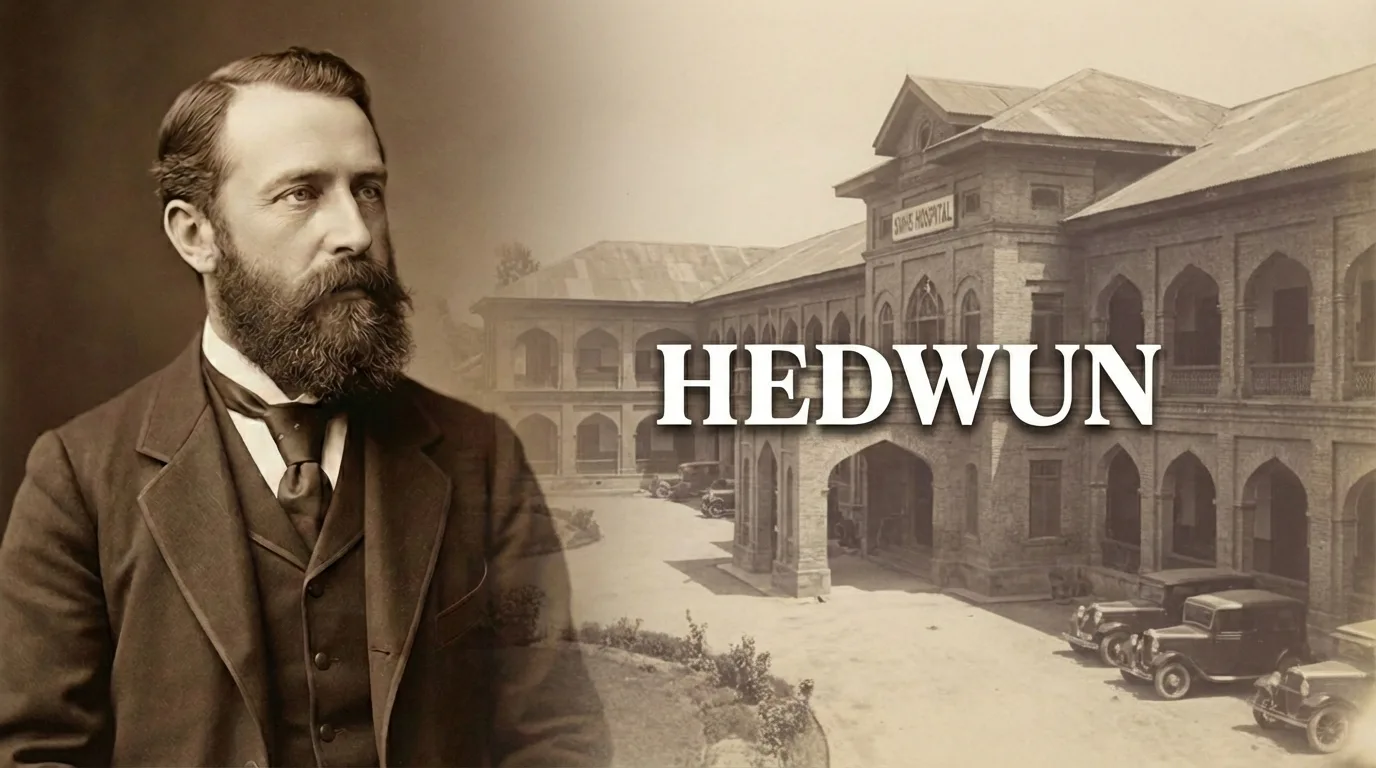
C.M. Hadow was an Austrian merchant who became one of the most prominent and respected figures in the history of modern Kashmir. His family arrived during the era of Rambir Singh to participate in the region’s renowned carpet trade, and in doing so, laid the foundation for a legacy of industrial innovation and public service. Hadow’s long and influential career would span the reigns of three successive Maharajas—Rambir Singh, Pratap Singh, and Hari Singh—making him a constant and influential presence during a transformative era of Kashmiri history. Known affectionately to locals as Hadow Seb, his contributions fundamentally shaped Kashmir’s commercial and social landscape. This biographical sketch explores his key contributions to industry, his commitment to public welfare, and the reasons his name is still remembered with deep respect.
A Pioneer of Industry and Fair Commerce
Hadow’s primary impact was felt in the revitalization and professionalization of the Kashmiri carpet industry. He was not just a merchant but a builder of institutions and a leader known for his ethical practices.
Founding a Carpet Empire
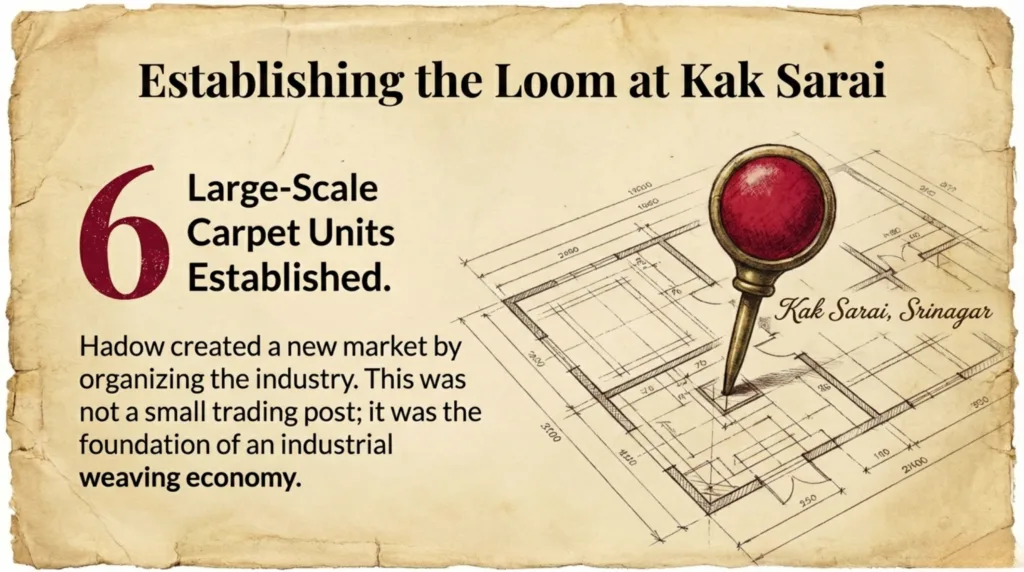
Hadow’s family established their own carpet weaving company in Kak Sarai, Srinagar, quickly transforming the local trade. He successfully created a new market for Kashmiri carpets by establishing 6 big carpet units in the city. These factories became major centers of employment, bringing together a wide range of local talent, including:
- Weavers
- Script writers
- Dyers
- Designers

A Reputation for Fairness
Hadow distinguished himself not only through his business acumen but also through his character as an employer. He cultivated a reputation for being remarkably fair and generous to his workers.
The Hadows were “peasant friendly and would pay good wages to their workers.”
This practice stood in stark contrast to the exploitative methods employed by figures like Pandit Raj Kak Dhar of the Dag Shawl Industry. For local workers, Hadow’s fair wages offered dignity, stability, and a reliable livelihood in a time when such treatment was not guaranteed.
Leadership in Commerce
His influence extended across the entire business community. Recognizing his leadership and vision, his peers elected him as the first president of the Kashmir Chamber of Commerce & Industries, a testament to his central role in shaping the region’s economy.
However, Hadow’s impact extended far beyond the walls of his factories, as he invested his success back into the community he called home.

A Philanthropist and Community Advocate
Hadow channeled his commercial success into profound acts of public service, focusing on the critical needs of the Kashmiri people in healthcare and the preservation of their cultural heritage.
Championing Public Health
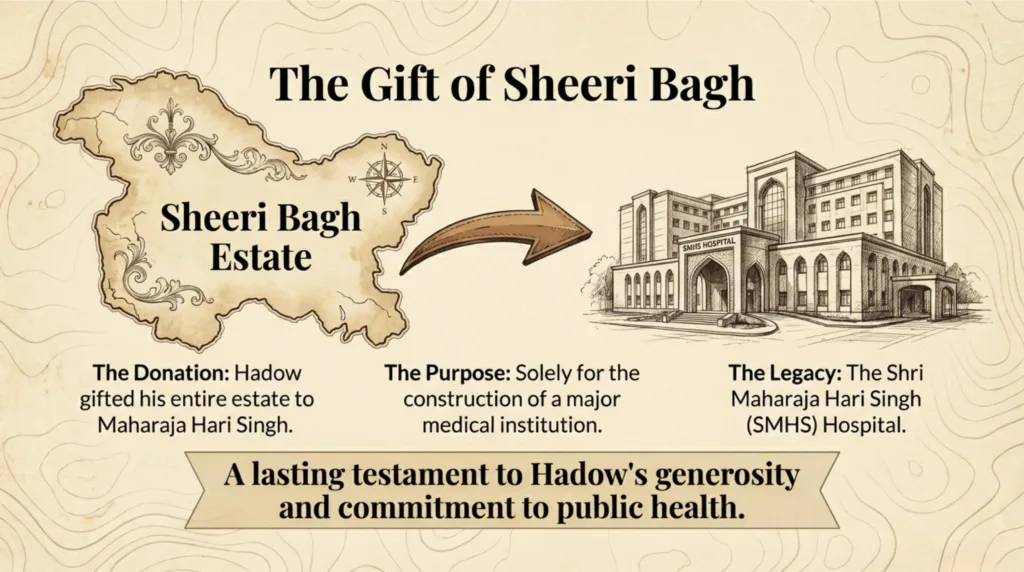
Perhaps Hadow’s most significant contribution to public welfare was his foundational role in establishing what would become Srinagar’s premier hospital.
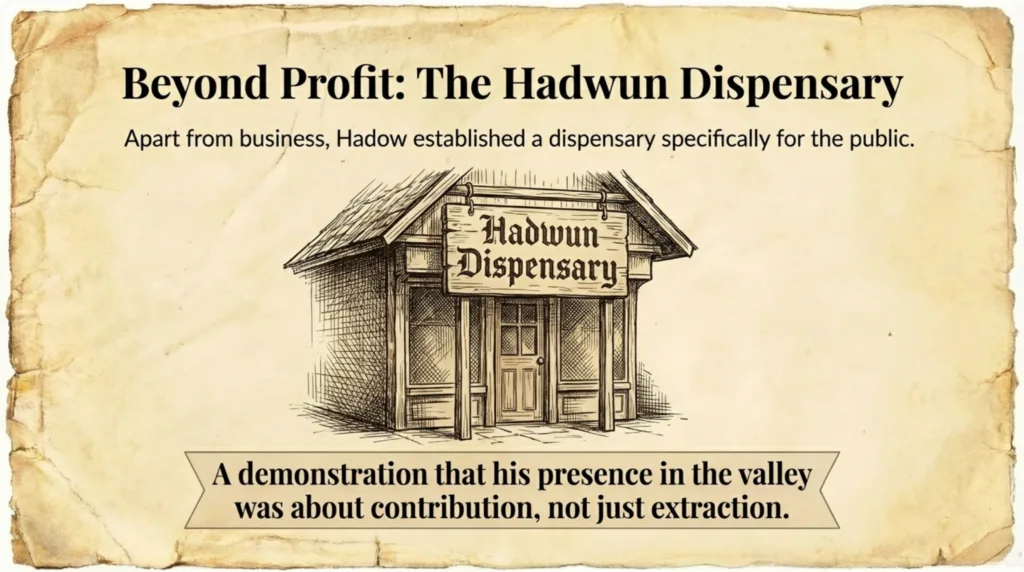
- Initial Step: He first established a public dispensary in Srinagar, which became widely known as the “Hadwun Dispensary”.
- Major Donation: In a landmark act of philanthropy, he donated his entire Sheeri Bagh Estate to Maharaja Hari Singh, providing the land needed for the construction of the Shri Maharaja Hari Singh (SMHS) Hospital.
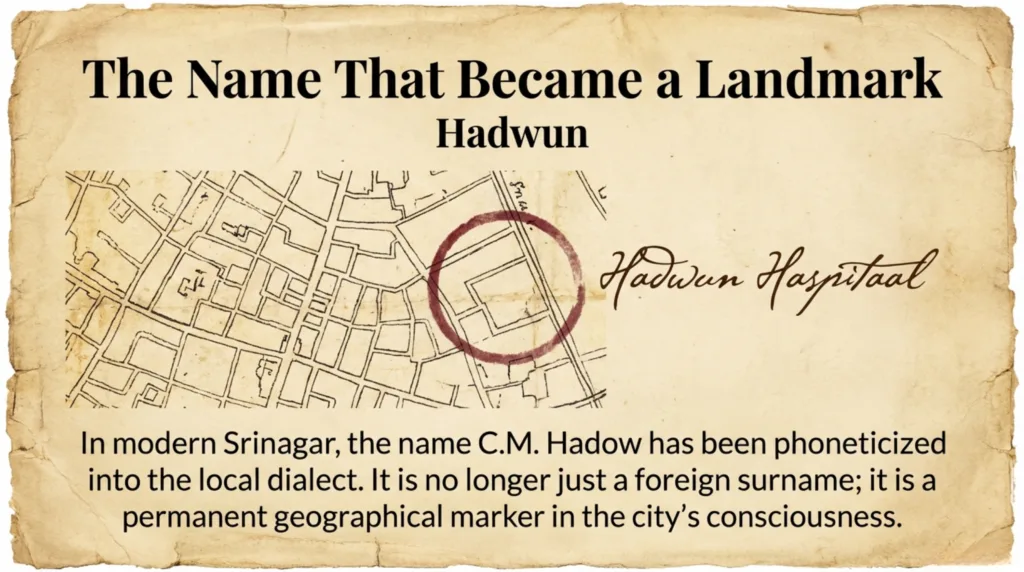
- Enduring Name: Because the new hospital was built on the site of Hadow’s original dispensary, generations of locals have continued to refer to the SMHS Hospital by its beloved, original name: ‘Hadwun Haspitaal’.
Protecting Cultural Heritage
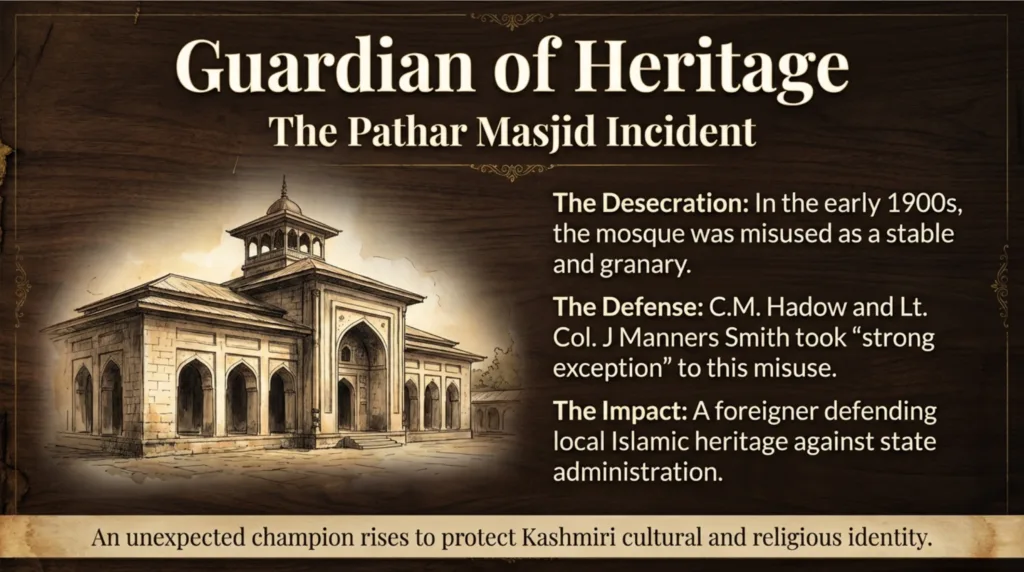
Hadow was also a strong advocate for the preservation of Kashmir’s historic landmarks. In the early 1900s, the famous Pathar Masjid of Srinagar was being used disrespectfully as a horse stable, a state granary, and later an orphanage under the rule of Pratap Singh. Alarmed by this desecration, C.M. Hadow, along with Lt. Col. J Manners Smith, took strong exception to the misuse of the sacred site, demonstrating his deep respect for the local heritage.
Through these acts of commercial innovation and profound public service, C.M. Hadow built a legacy that would outlive him.
The Enduring Legacy
Decades after his departure from Kashmir, C.M. Hadow’s name remains woven into the fabric of daily life, preserved in the names of the very institutions he helped create.
A Name Etched in Memory
His contributions are most prominently remembered in two key local landmarks:
- In Healthcare: The beloved local name for SMHS Hospital remains ‘Hadwun Haspitaal’.
- In Education: The valley’s historic ‘Biscoe School’ was also once known as the ‘Hadow Memorial School’.
A Final Tribute
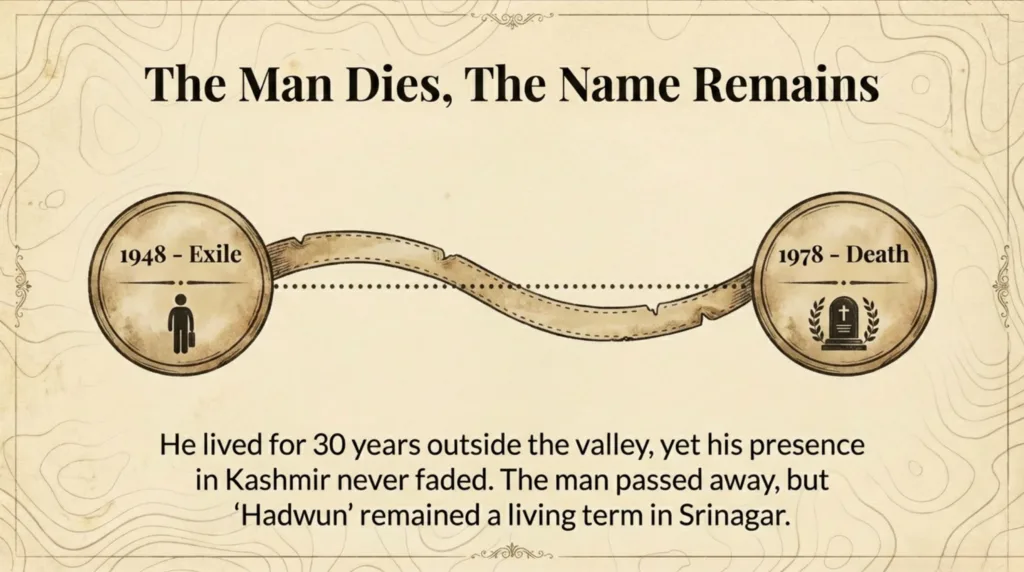
C.M. Hadow was exiled from Kashmir in 1948 and passed away in 1978. Though his life ended far from the valley he had served so well, his impact proved to be permanent.
…but his name in Kashmir.
Never Died!

